
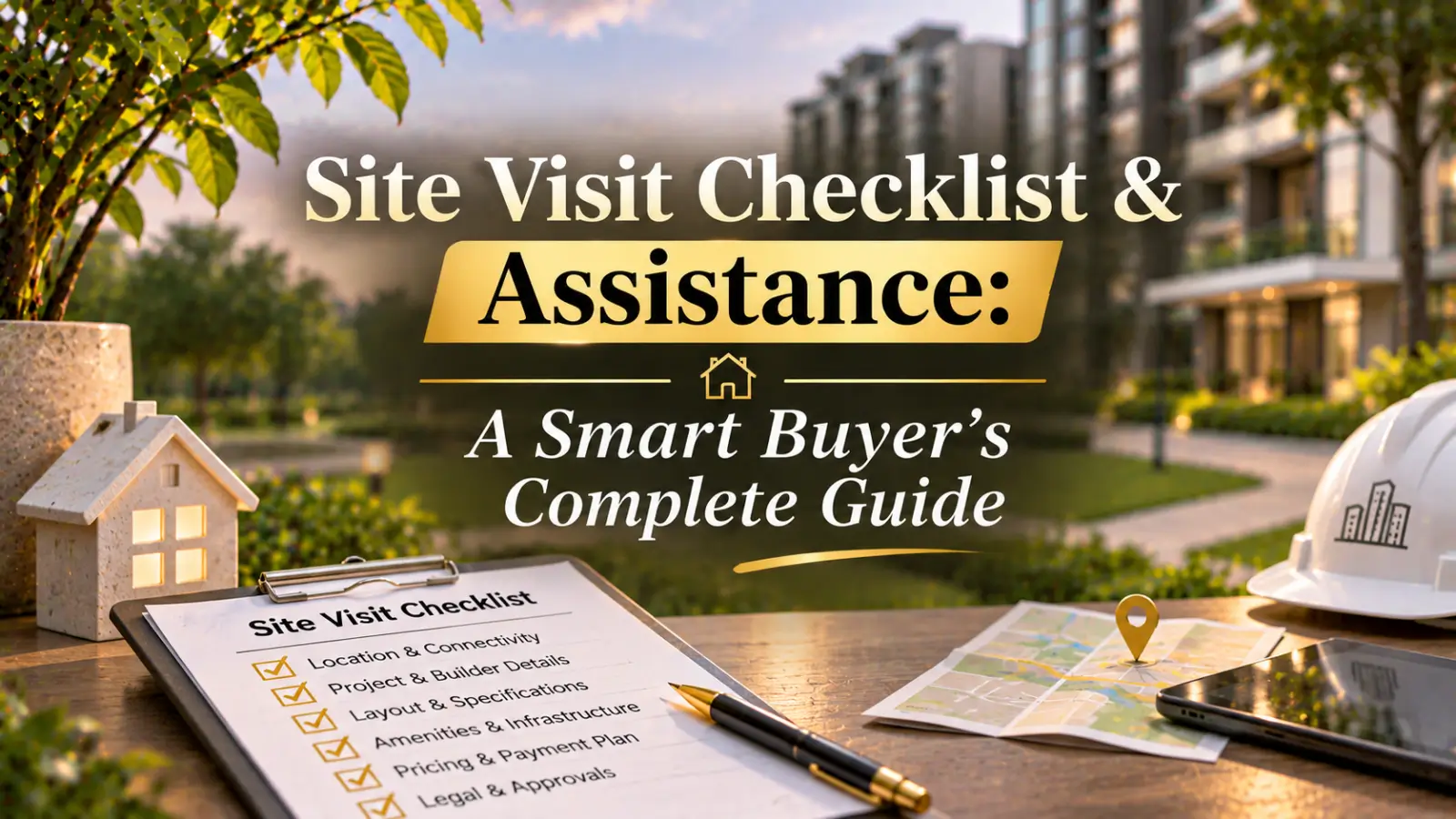
Purchasing a home or investment property is one of the largest financial decisions most people ever make. Yet so many purchasers make the decision after one quick walkthrough. Brochures, 3D renderings and sample flats look picture perfect, but the actual site, tower or villa community may tell a whole other story. A well-prepared site visit covers that gap by letting you see it all with your own eyes. This is where a good site visit checklist and assistance procedure comes into play, turning a casual outing into an organized examination. In this article we’ll go through why visits matter, what to look at on the ground, how expert coaching helps and what to do afterward. These practical techniques will help you choose properties with considerably better confidence and fewer regrets whether you are a first-time buyer, an NRI investor or a family upgrading to a larger property.
Why Every Property Buyer Needs a Proper Visit Plan
Many customers think that a visit is merely a formality before paying the booking payment but experienced agents realize that this is the most crucial verification stage in the whole path. Sales offices are built to dazzle, photos and videos are manipulated to display the greatest viewpoints. When you are on the actual site you can see the neighboring roads, the noise levels, the drainage, the construction in the vicinity and the real distance to schools, hospitals and transport. A site visit checklist & assistance plan guarantees none of these elements get lost in the excitement of the moment. This also keeps the dialog with the developer or vendor focused on facts, making it much easier to compare several projects. Writing your observations down at the time also eliminates confusion later.
Timing and preparation are as important as the inspection itself. This preparation is the start of a reliable site visit checklist and assistance routine. Try to visit at different times of the day. A peaceful street at midday can be a bottleneck in the evening. Bring a notebook, measuring tape, phone with compass app and copies of the project brochure, approved plan and price sheet. Let the developer tell the appropriate executive, engineer or sales manager beforehand to answer technical questions. If you are coming from any other city, organize your schedule so that you can see two or three shortlisted projects on the same trip. It also helps to take a family member or trusted friend with you. A second pair of eyes often sees things you don’t, especially when you are busy negotiating.
Essential Points to Inspect During the Property Visit
When you get there, start on the outside and work your way in. These include location, breadth of access road, parking, drainage and neighboring development. All these give you an idea of future appreciation and daily convenience. For projects under construction, compare the actual progress with the stage promised by the builder’s timeline, and confirm that the structure meets the approved plan. When choosing a ready house pay attention to finishing quality, water pressure, ventilation and natural light. Walk around every room, open the windows, turn on the taps and lights, and stand on the balcony, to get a feel for the real view and the seclusion. Don’t rush this stage as it is far cheaper to remedy little issues before you book than after you take possession. A realistic site visit checklist and help technique categorizes these findings so you can objectively rate each home. Here are the highlights to look for on every visit:
- Approvals: ask to see the RERA registration, sanctioned plan and land title documents.
- Connectivity: check road access, public transport and travel time to your workplace.
- Construction quality: inspect walls, flooring, plumbing and electrical fittings.
- Amenities: confirm that promised features are built or clearly scheduled.
- Surroundings: observe noise, water logging and neighbouring developments.
If you see something, ask questions about everything. A credible developer or vendor will be glad to clarify specs, maintenance rates, possession timescale and payment schedule. Take pictures and brief recordings of anything that is not obvious and make sure that the carpet area, super built-up space and parking allotment are addressed openly. Write down every discrepancy between what the sales team informed you in the office and what is there on the ground. If it feels elusive, flag it for follow-up instead of glossing over it. The finest site visit checklist and assistance practices are those that encourage purchasers to be curious, patient and polite, but nevertheless firm about having clear written answers before any commitment of funds is made. Requesting clarification isn’t being difficult; it’s protecting your investments and your family’s future.
How Professional Site Visit Assistance Makes Buying Easier
Not all buyers have the time, technical skills or local knowledge to view properties for themselves and this is where professional help really adds value. An expert Real Estate Consultant will set up the appointments, liaise with the developer and usually offer pick up and drop off facilities for groups viewing a number of projects in a day. During the tour, the consultant explains floor plans, points out strengths and flaws and helps you compare pricing against similar projects in the vicinity. The whole site visit checklist & support service includes pre-visit shortlisting so you only see properties that fit your budget, location choice and possession schedule. It saves weekends that would otherwise be spent wading through unsuitable options and significantly cuts down on decision fatigue for busy working professionals and families. Most consultants also include market information such as resale values, rental demand, and future infrastructure, which are difficult for purchasers to locate in brochures.
Bringing in a professional also increases your negotiating position. Consultants have experience with standard discounts, payment plans and hidden expenses such as club membership, floor raise and legal fees as they deal with multiple developers. They see things in the brochure that aren’t in the actual build. Plus, they remind you to ask for paperwork that first-time buyers tend to forget. For NRIs and out-of-town investors, a trusted representative can also make a preliminary visit, record a video walkthrough, and share a thorough report before you travel. When selecting a provider, look for transparency, proven understanding of projects and clear explanations of the way the site visit checklist and assistance is provided. Avoid anyone who tries to rush you into booking that day without letting you check. A good counselor will be pleased to wait while you look everything over.
Final Steps to Take After You Leave the Site
The job doesn’t finish when you walk out the project gate. Within a day or two, evaluate your notes, images and the documents you obtained and contrast each property against the same criteria. Check the developer’s registration, approvals, historical project delivery record and client feedback from independent sources. Before paying any token sum, consult a property lawyer to check the title, terms of agreement and encumbrance facts. If possible, revisit your short-listed proposal, preferably unannounced or at a different time, to ensure that nothing seemed staged. Finally, add up the whole cost of ownership including registration, stamp fee, upkeep and interiors. With a disciplined site visit checklist and assistance routine from the initial inspection to the final choice, you avoid risk, negotiate effectively and buy in a property that truly suits your long-term goals.